
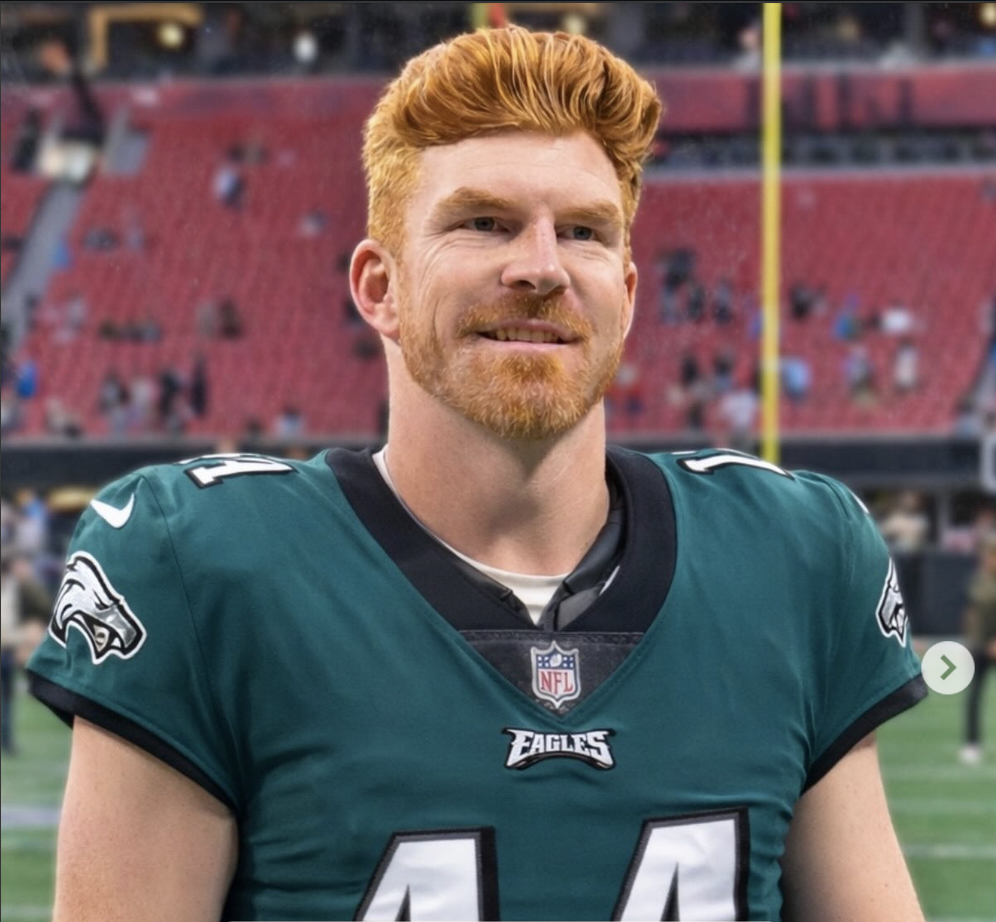
For most of the last decade and a half, Andy Dalton has existed in a strange corner of NFL consciousness. He was never quite elite enough to dominate the league’s quarterback conversation, but he was also far too competent and durable to disappear into the endless churn of backup passers. Coaches trust him. Front offices value him. Young quarterbacks learn from him. And now, after stops in Cincinnati, Dallas, Chicago, New Orleans, and Carolina, Dalton has landed in Philadelphia as part of the Eagles’ ongoing effort to build one of the NFL’s deepest quarterback rooms.
The Eagles acquired Dalton from the Carolina Panthers in exchange for a 2027 seventh-round draft pick, a move that initially looked minor on the surface but reveals a great deal about how Philadelphia approaches roster construction.
This is not a franchise searching for a starter. Jalen Hurts remains firmly entrenched as the face of the organization and one of the NFL’s most dynamic quarterbacks. Instead, the Dalton move reflects something the Eagles have emphasized for years: quarterback depth matters, veteran experience matters, and having intelligent football minds in the room can shape an entire offense.
Dalton arrives in Philadelphia with nearly 40,000 career passing yards, 254 touchdown passes, and three Pro Bowl selections on his résumé. ([Reuters][2]) Those numbers place him in rare territory among active quarterbacks. Even at 38 years old, he brings a level of professionalism and institutional football knowledge that few backup quarterbacks can match.
The version of Dalton entering Philadelphia is very different from the aggressive young passer who once helped guide the Cincinnati Bengals to five consecutive playoff appearances. Back then, Dalton operated as a rhythm passer capable of distributing the football efficiently within a structured offense. He thrived on timing routes, quick decisions, and avoiding catastrophic mistakes. While he never developed into a true top-tier franchise quarterback, he became one of the league’s most dependable starters during the 2010s.
Now, his value comes less from arm talent and more from experience.
That matters for an Eagles organization navigating a fascinating transitional moment offensively. Philadelphia still possesses one of the league’s most talented rosters, but the franchise has also spent the last year confronting questions about offensive consistency, coaching structure, and the long-term evolution of Hurts as a passer. Bringing in Dalton appears to be partially about insurance, but it may also be about mentorship and perspective.
Dalton spent the last several seasons in Carolina helping Bryce Young navigate the difficult early stages of NFL quarterback development. Reports from around the Panthers organization consistently framed Dalton as an important stabilizing veteran presence, someone capable of helping younger quarterbacks understand protections, defensive disguises, preparation habits, and the emotional rhythm of an NFL season.
That dynamic could translate naturally to Philadelphia.
Hurts is already an established starter, but even accomplished quarterbacks benefit from experienced veterans in the room. NFL offenses have become increasingly collaborative, with quarterbacks expected to function almost like assistant coaches. Film study, defensive recognition, sideline adjustments, and game-planning conversations all become more valuable when multiple experienced voices are involved.
The Eagles also appear committed to maintaining one of the league’s strongest contingency plans behind their starter. Injuries derail NFL seasons quickly, and Philadelphia has watched enough postseason football to understand how fragile championship windows can become when quarterback depth collapses. Dalton may no longer be capable of carrying a franchise for 17 games, but he remains experienced enough to stabilize an offense in short stretches if needed.
That reliability explains why Dalton has survived so long in the league.
Backup quarterback has quietly become one of the NFL’s most psychologically demanding jobs. Teams want players who can prepare like starters without receiving starter reps, maintain leadership credibility despite reduced playing time, and remain ready to perform with almost no warning. Dalton has evolved into one of the league’s prototypes for that role.
Philadelphia also has an intriguing young quarterback situation behind Hurts. Tanner McKee has shown flashes of potential, and some observers immediately speculated that Dalton’s arrival could signal future movement involving McKee. ([CBS Sports][5]) Whether that ultimately happens remains unclear, but Dalton undeniably changes the dynamics of the quarterback depth chart.
The move also fits the Eagles’ broader organizational philosophy under general manager Howie Roseman. Philadelphia consistently prioritizes depth at premium positions, especially along the offensive line, defensive front, and quarterback room. The franchise prefers insulation over desperation. Dalton represents another example of the Eagles spending modest resources to reduce potential volatility later in the season.
And there is something fitting about Dalton ending up in Philadelphia at this stage of his career.
The city tends to appreciate hardened veterans — players who understand pressure, criticism, and the week-to-week brutality of NFL football. Dalton has experienced nearly every phase of an NFL career imaginable: franchise savior, playoff disappointment, veteran placeholder, mentor, backup, and now experienced reserve on a contender.
Very few quarterbacks last 16 seasons in the NFL. Even fewer reinvent themselves successfully across multiple stages of their careers. Dalton has done exactly that.
He may never take a meaningful snap for the Eagles. If everything goes according to plan in Philadelphia, Hurts stays healthy and Dalton spends most Sundays holding a headset and helping on the sideline. But for a franchise chasing another Super Bowl appearance, having someone like Andy Dalton in the building is the kind of detail serious organizations value.
Because in the modern NFL, quarterback rooms are not built only around stars.
They are built around stability.


0 comments:
Post a Comment